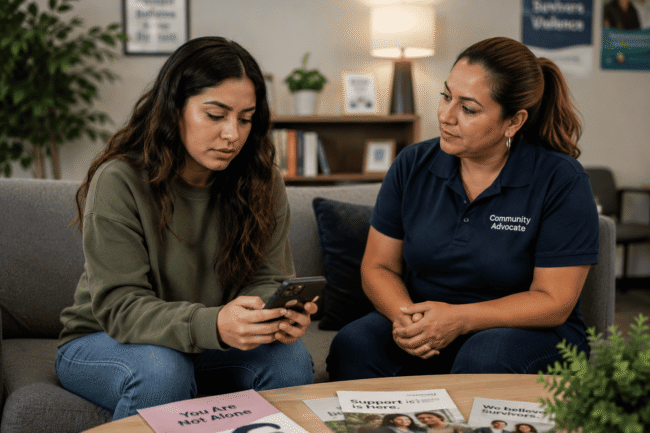

Advocate listening compassionately as a survivor talks about why they may minimize abuse

Why Survivors May Minimize or Deny Abuse

Why survivors may minimize or deny abuse is a question that deserves compassion, not judgment. Many survivors do not immediately describe their experience as abuse because coping with fear, manipulation, and emotional overwhelm can make the situation harder to name clearly. Understanding this response matters for families, friends, and communities. When people expect survivors to…

Compassionate support conversation about domestic violence and mental health

The Link Between Domestic Violence and Mental Health Disorders

The link between domestic violence and mental health disorders is important to understand because abuse can affect far more than immediate physical safety. Survivors may also experience anxiety, depression, post-traumatic stress, and other emotional challenges that continue long after a specific incident ends. Recognizing this connection can help families, advocates, and community members respond with…

Woman preparing for leaving an abusive partner by reviewing documents privately

Leaving an Abusive Partner: Safety Planning Steps

Making the decision to leave an abusive relationship can be overwhelming and complex. It’s important to prioritize your safety and take thoughtful steps toward independence. Every situation is unique, which means safety planning should reflect your specific circumstances. This guide offers practical strategies to help you prepare for a secure future, empowering you to take…