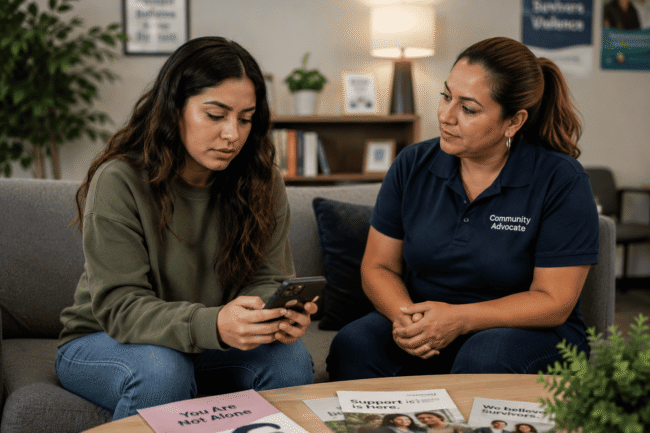
Advocate discussing emotional blackmail and relationship warning signs with a survivor

Recognizing Emotional Blackmail in Relationships

Emotional blackmail in relationships can be difficult to recognize because it often hides behind guilt, pressure, fear, or repeated emotional manipulation. A person may feel pushed to comply, apologize constantly, or ignore their own boundaries just to avoid conflict or punishment. Recognizing these patterns matters because manipulative behavior can gradually erode safety, confidence, and emotional…

Advocate listening compassionately as a survivor talks about why they may minimize abuse

Why Survivors May Minimize or Deny Abuse

Why survivors may minimize or deny abuse is a question that deserves compassion, not judgment. Many survivors do not immediately describe their experience as abuse because coping with fear, manipulation, and emotional overwhelm can make the situation harder to name clearly. Understanding this response matters for families, friends, and communities. When people expect survivors to…

Compassionate support conversation about domestic violence and mental health

The Link Between Domestic Violence and Mental Health Disorders

The link between domestic violence and mental health disorders is important to understand because abuse can affect far more than immediate physical safety. Survivors may also experience anxiety, depression, post-traumatic stress, and other emotional challenges that continue long after a specific incident ends. Recognizing this connection can help families, advocates, and community members respond with…